Full grain, corrected grain, split: types of leather explained
“Full grain”, “top grain”, “genuine leather”, “split”… Shop descriptions are full of words that sound alike and do not mean the same thing. This guide explains where each quality comes from in the hide, which animal and tanning to choose, and how thick your leather should be for your project.
A hide, layer by layer
A hide is not uniform through its thickness. On top is the grain: tight, dense fibres with the natural surface of the skin, its pores and small marks. Below is the corium, thicker, with looser fibres. At the bottom, the flesh side is the rough side you see on the back of your leather.
Hides are usually too thick to use as they are, so tanneries split them in their thickness. Where the cut is made, and what is done to the surface afterwards, decides the quality of the leather.
The qualities of leather
Full grain
The grain is kept intact: not sanded, not corrected. It is the strongest leather, because the tightest fibres are still there, and the most honest one: you see the real surface of the skin, small scars included. It develops a beautiful patina over time.
This is what I use for my pieces, and what I recommend for wallets, cardholders and anything you will carry every day.
Corrected grain (top grain)
The surface is lightly sanded to remove marks, then usually covered with a pigment layer and sometimes embossed with an artificial grain. It looks more uniform and resists stains better, but it ages less: no real patina, and once the coating wears, it does not recover.
In English, “top grain” is often used for this quality. The name is confusing: it does not mean “the best grain”.
Nubuck and suede
Both are sanded to raise a soft nap. Nubuck is sanded on the grain side, so it keeps much of the strength of the grain. Suede is sanded on the flesh side or on a split, so it is softer and weaker. Both stain easily.
Split
The lower layer, cut from under the grain. It has no grain of its own: it is often sanded into suede, or coated and embossed to imitate a grain leather. It is less strong and should be kept for linings or pieces that do not work much.
Bonded leather
Leather scraps and fibres glued together into a sheet. Avoid it: it peels and tears quickly, and it is not really leather any more.
Which animal?
The animal changes the thickness, the softness and the look of the grain.
- Cow gives large, strong hides. It is the leather of most belts, bags and wallets, and of most of the vegetable-tanned leathers I use.
- Vachette is the French name for leather from young cows: finer and more supple than adult cow.
- Calf has a very fine, tight grain and is supple even when thin. Perfect for elegant small goods.
- Goat is strong for its thickness, with a pebbled grain. Great for linings, pouches and pieces that must stay thin.
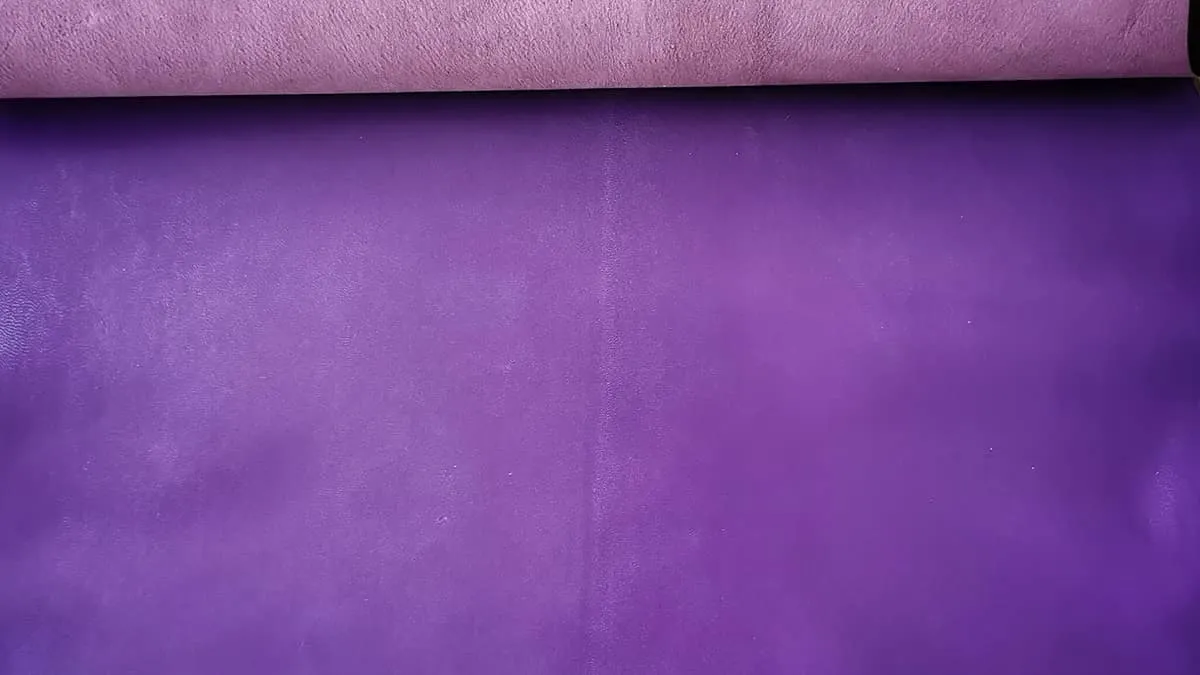
A goat leather: strong for its thickness, with a pebbled grain.
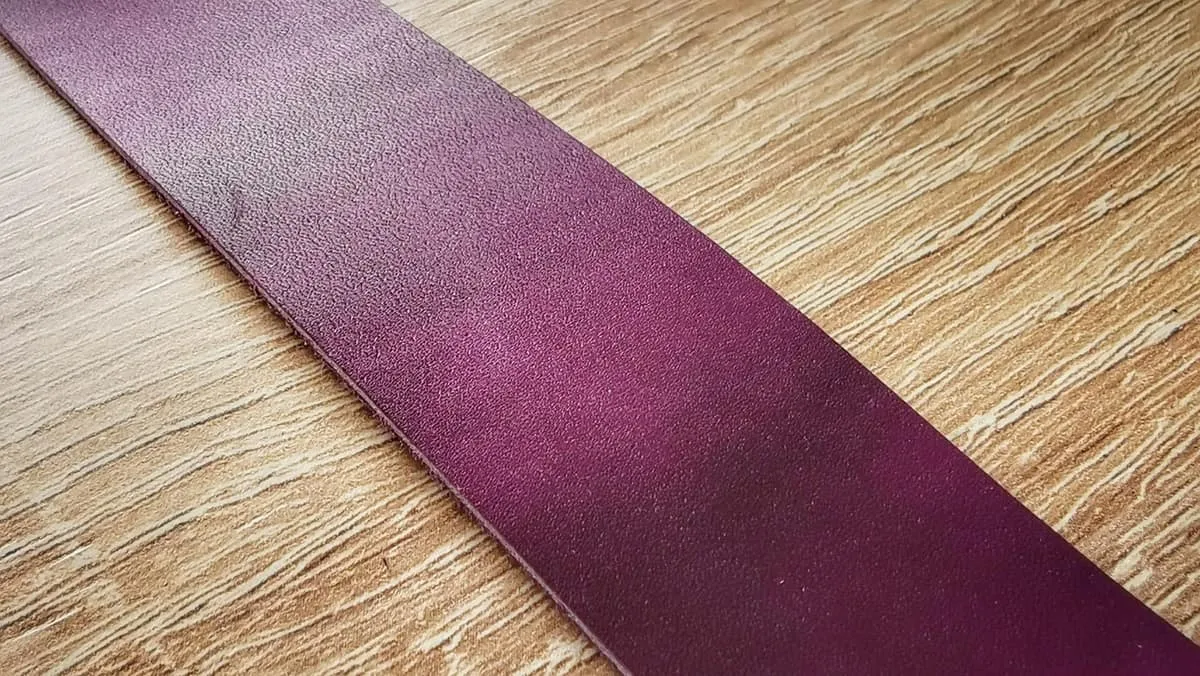
A calf leather: a finer grain, supple even when thin.
Which tanning?
Tanning turns a raw hide into a stable material. It changes how the leather behaves on your workbench.
- Vegetable-tanned (veg-tan) leather is tanned with plant tannins. It is firm, holds its shape, takes tooling and stamping, burnishes beautifully on the edges and patinas with time. I explain why I use it in why I use Tuscan vegetable-tanned leather.
- Chrome-tanned leather is softer, more stable in colour and more resistant to water, but its edges do not burnish well: they are usually painted.
- Combination tannings, like latigo, mix both for a supple yet strong leather.
Reading a supplier’s label
- Thickness is given in millimetres in Europe, and often in ounces (oz) elsewhere: 1 oz is about 0.4 mm. A “3–4 oz” leather is about 1.2 to 1.6 mm thick.
- Whole hide, side, shoulder, bend: the part of the hide you buy. The back (bend or croupon) is the densest and most regular; the shoulder is a little looser; the belly is the softest and stretchiest.
Which thickness for which project?
For small goods like cardholders and wallets, 1.2 to 1.4 mm is ideal. For thicker pieces such as bags, or projects where several layers overlap, go from 1.5 mm without exceeding 2 mm: beyond that, the piece quickly becomes too thick.
Where to start
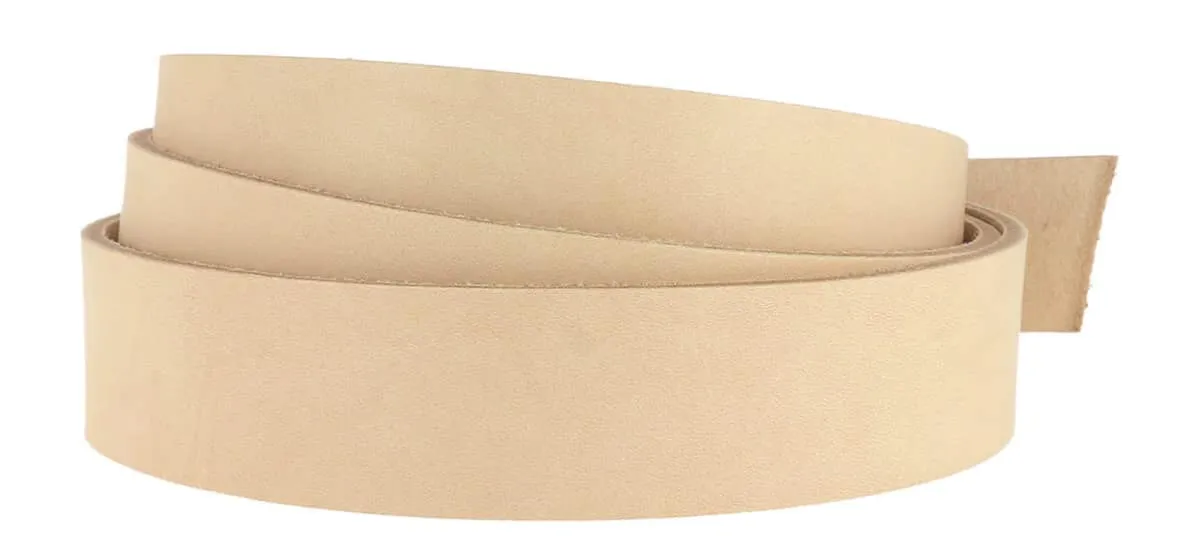
A natural vegetable-tanned leather, without any finish.
If you are starting out, choose a natural vegetable-tanned leather, without any varnish or finish. It forgives a few mistakes when you dye, wax or burnish it, and it shows you how leather really behaves.
I buy part of my leather from Buy Leather Online, my partner. With the code LORD7, you get a discount on your order.
To understand what happens to the surface once the leather is tanned, read the next guide: aniline, semi-aniline, pull-up: leather finishes explained. And to see the leathers I work with, have a look at my materials.